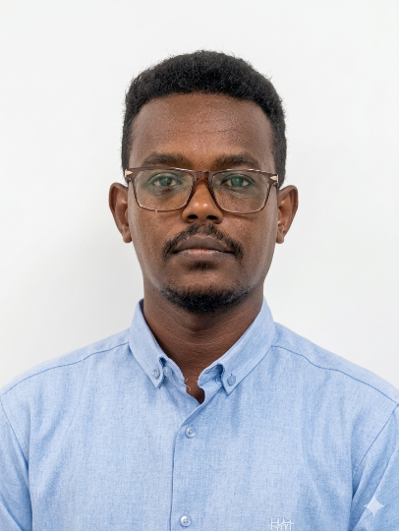
Since completing the Australia Awards Short Course in Mining Governance in Africa in 2024, Mining Geologist and alumnus Mohamed Aitiasso Mohamed has played a direct role in around 12 major technical projects and field assignments across Djibouti’s mining sector.
His work spans geological mapping in Djibouti City and Arta, identifying potential construction material sites, updating the national mining cadastre using ArcGIS Geographic Information System (GIS), evaluating mining permits, inspecting crushing and mining sites, and monitoring exploration activities by private companies. A mining cadastre is an official registry or database for mining rights and other details including who has rights to mine in specific areas, the exact geographic boundaries of mining licenses, the status of permits and legal and administrative details about mining operations.
The impact of his short course training has been visible in measurable improvements. Since returning to Djibouti, Mohamed has contributed to the modernisation of geological data systems, including the integration and updating of roughly 70 per cent of active mining permits into a digital mapping platform. He also helped develop a georeferenced database covering key mineral resources across the country. These improvements, combined with better GIS-based workflows, have reduced the time required to locate and analyse geological information by approximately 30 per cent. This shift has improved the consistency and quality of technical reporting, enabling government officials and investors to make more informed decisions. It has also supported greater transparency and efficiency in how mineral resources are managed and assessed.
Collectively, these efforts have strengthened government decision-making, improved mineral governance systems, and laid a stronger foundation for investment and job creation across Djibouti’s five administrative regions.
Djibouti sits at a strategic crossroads between Africa and the Middle East, where the Red Sea meets the Gulf of Aden. Known for its volcanic terrain and underexplored mineral resources, the country’s mining sector remains in a developmental phase. Large areas are still geologically under-mapped, making reliable data, strong institutional systems and technical expertise essential for sustainable growth.
As a Mining Geologist within Djibouti’s Ministry of Energy and Natural Resources, Mohamed has long been committed to ensuring that the country’s mineral wealth contributes meaningfully to national development. Prior to the Australia Awards Short Course at The University of Queensland, he already had solid technical grounding. However, the training significantly strengthened his exposure to modern governance frameworks, international standards and practical tools that reshaped how he approaches his work.
“The course strengthened my understanding of modern mining governance, resource management, transparency and regulatory frameworks,” he said. “It has enhanced my ability to contribute to institutional strengthening and the adoption of international best practices within the Ministry.”
Beyond data systems, Mohamed has taken on a more strategic regulatory role. Each year, he participates in the monitoring and evaluation of about 20 mining-related cases. These include exploration licence applications, drilling and prospecting program, permit renewals, approvals for sample exports, and quarry operations. His oversight helps ensure compliance with national regulations while reinforcing accountability and responsible resource development.
His broader responsibilities include geological mapping, managing resource inventories, supervising exploration and drilling activities, processing technical applications, and maintaining national geological archives. Together, these functions are gradually building a more detailed and reliable understanding of Djibouti’s mineral potential.
Importantly, the Australia Awards experience has expanded more than just Mohamed’s technical capacity. It has deepened his understanding of modern governance principles, particularly the balance between economic development, environmental protection, and community engagement. These perspectives now shape his daily decision-making and encourage more sustainable approaches within the sector.
The benefits of his work are also being felt beyond government offices. Improved geological mapping, clearer permitting systems, and better protection of mining interest areas are now supporting communities, operators and investors across Djibouti’s regions. While the full economic impact will take time to materialise, the groundwork is already strengthening investor confidence and creating conditions for future employment opportunities.
Equally valuable are the professional networks established through Australia Awards Africa. Mohamed continues to engage with alumni across Djibouti and the wider African region through technical collaboration and knowledge sharing. These relationships support ongoing exchange in areas such as governance, environmental sustainability and resource management, extending the impact of the scholarship well beyond individual practice.
Today, Mohamed remains focused on advancing sustainable mining governance in Djibouti. By combining technical expertise, leadership skills and international networks gained through the Australia Awards, he is helping to modernise systems and strengthen institutional capacity in a sector critical to national growth.
Reflecting on his journey, he emphasises that effective resource governance is central to long-term development. For him, his Australia Awards Short Course was not only a professional milestone but a practical enabler, translating knowledge into action, improving systems, and contributing to a more transparent, efficient and sustainable mining future for Djibouti.

Connect with us
Any questions?
If you cannot find the answer on our FAQs page, feel free to get in touch by emailing .