
Australia Awards Africa alum Moses Fordjour’s story of change demonstrates how one person’s dedication to influencing policy in Ghana can bring meaningful changes to the lives of vulnerable groups, such as people with disabilities.
In applying for an Australia Awards Scholarship to pursue a Master’s in Disability Policy and Practice at Flinders University, Moses focused on broadening his knowledge about disability policy. Upon returning to Ghana in 2022, Moses not only built his organisation’s (the Ghana Federation of Disability Organisations (GFD)) capacity to influence national policies, which in turn impacted the lives of people with disabilities, but his country situational analysis report for the United Nations Development Program (UNDP) led to Ghana’s first-ever Disability-Inclusive Data Framework.
As a direct result of his work, Ghana also received over half a million US dollars (US$600,000) in funding from the United Nations Partnerships on the Rights of Persons with Disabilities (UNPRPD R4) to strengthen legislative and policy environment for disability inclusion and to develop an Inclusive Data Collection Framework to streamline the production of disaggregated data for policy planning, implementation and monitoring; 3. Multi-Sectoral Disability Inclusive coordination to improve the lives of over two million people with disabilities.
His scholarship journeySoon after joining the Ghana Federation of Disability Organisations (GFD) in 2012, Moses realised that this group experiences several systemic exclusions. He understood that people with disabilities are diverse and, therefore, specialised knowledge and experience are required to work effectively with diverse groups and individuals. Moses felt the need to specialise in advocating for persons with disabilities, particularly in policy development and setting, as there were missing aspects of disability policy that he could address. At the time, the GFD lacked capacity around policy development, which would allow them to suggest alternatives to policymakers. The executive director and Moses’ supervisor fully supported him in broadening his knowledge in this regard.
“I was also encouraged by the executive director’s support about the relevancy of my scholarship studies, not only for the GFD but also because it had the potential to impact the wider policy landscape to the benefit of people with disabilities,” Moses says.
In Australia, Moses followed a pathway course, first completing a graduate certificate course in Disability Studies, which then qualified him to continue with the master’s program. With a large practical course component, he acquired ample skills and knowledge about disability in general, people with disabilities, and relevant organisations and institutions, and policy implementation.
Moses also completed additional short certificate courses that qualified him to work part-time at two South Australia National Disability Insurance Scheme (NDIS) service providers – Friendly and Graceful Care Services Pty Ltd and Ability Rise Accommodation and Care Pty Ltd. His work here involved dealing with different NDIS participants, including people with psychosocial, physical, and intellectual disabilities, assisting them to implement their care and support plans (including independent living, community participation) and access to essential services.
According to Moses, his experience of working with these organisations and individuals helped him understand the course content much better and quicker. While studying, he also made sure to stay connected to the GFD back home and still participated remotely in some of the critical planning and program implementation activities of the Federation.
Moses also found time for volunteering with local groups such as the South Australian Adventist Development and Relief Agency (ADRA), who worked with farmers who lost their farms to the devastating bushfires of 2019 and 2020. He also assisted the Blaze Aid volunteering group that helped farming communities outside of Adelaide to re-erect their fences. Although South Australia was in total lockdown during this period at the height of the COVID-19 pandemic, Moses and his group had special permission as essential service providers to move around and continue their work.
Returning home
Upon completing his award, Moses returned to Ghana equipped with the knowledge and practical skills in policy advocacy and the implementation of targeted interventions, allowing him to better impact the lives of people with disabilities. Soon after rejoining his organisation, he was promoted to a senior manager position in charge of monitoring, evaluation, and knowledge management. This was later followed by a promotion to his current position of Director of Research, Monitoring, and Evaluation.
This enabled Moses to contribute to decision-making at the senior management level, helping to shape the policy advocacy landscape through the development of alternative policies and policy briefs to influence government disability policymaking interventions, and the improvement of the quality and availability of data to allow for evidence-informed policymaking and implementation. He also contributed to the capacity building of organisations and stakeholders in the sector about disability policymaking and implementation using comparative examples from Australia. He excels in engaging consultancies and other stakeholders in support of organisations and disability inclusion programs and practices.
Moses’ wide impact
His organisation nominated him to participate in the United Nations, Ghana’s one-week training program on the Essential Pre-Conditions for Implementation of the UN Convention on the Rights of Persons with Disabilities in 2022.
“The quality of my contributions, informed by my practical experiences from the Australian context, attracted attention, and I was hired by UNDP as a consultant to carry out a country situational analysis with the aim of informing their program proposal to access funding from the United Nations Partnership for the Rights of Persons with Disabilities (UNPRPD),” Moses adds.
Eventually, UNDP developed a program from his report’s key recommendations, which saw Ghana receiving six million US dollars to support systems and strengthen institutional capacity for policymaking and implementation, with the aim of improving the lives of over two million people with disabilities.
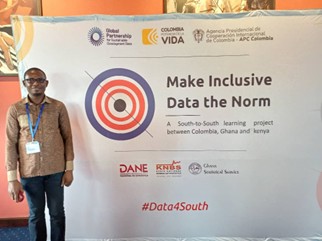
Moses explains: “One of the recommendations from my work is the need to strengthen disability data for effective advocacy, policy planning, and implementation. As a result, the Ghana Statistical Service received funding to work collaboratively with the United Nations Population Fund (UNFPA) in developing disability-inclusive data by reforming the institutional and administrative data collection systems. The country now has a Disability-Inclusive Data Framework.”
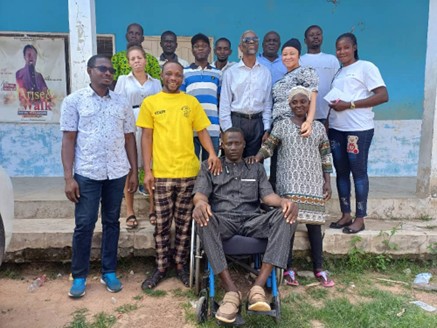
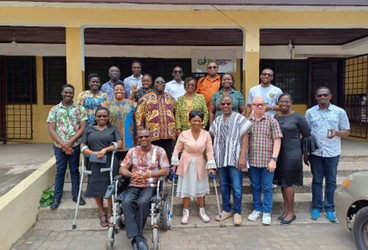
This data framework impacts the way administrative data is collected and disaggregated across all data-producing public institutions in Ghana, ensuring that the number of people with disabilities is correctly reported to inform policy planning and implementation. The new UNDP program led to support with funding (part of the USD 600,000) for the Ghana National Council of Persons with Disabilities to strengthen their operational capacities and the Ghana Federation of Disability Organisations as the national umbrella Organisation of People with Disabilities (OPDs). The Federation has 12 members representing distinctive impairment groups of people with disabilities with the aim to expand its operational capacities and mobilise the underrepresented disability groups for inclusion in the national advocacy efforts and to promote the rights of people with disabilities in Ghana.
Looking to the future
Moses Fordjour’s tireless dedication has impacted the policy landscape and led to systemic changes in Ghana that will last for long into the future. However, many more systemic barriers continue to affect the lives of millions of people with disabilities. The groundwork has been laid, but Moses is determined to continue his work to benefit the lives of people with disabilities in Ghana for good.

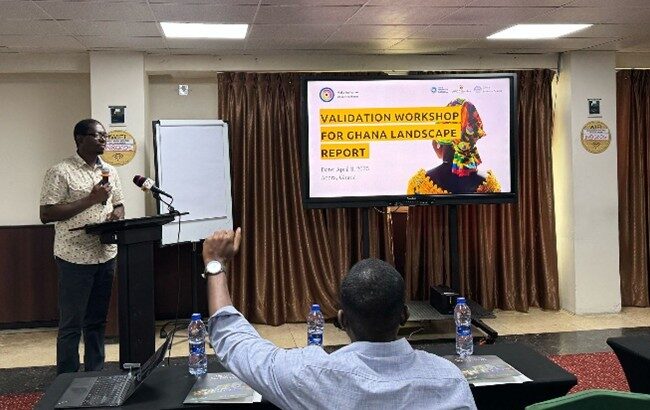
Accra: Moses moderating discussions at a validation workshop of the Ghana Landscape Report about Female Genital Mutilation.

Connect with us
Any questions?
If you cannot find the answer on our FAQs page, feel free to get in touch by emailing .