
Trade agreements are usually remembered for their signatures, summits, and ceremonial handshakes. What is rarely seen is the painstaking analytical work that precedes those moments, the modelling, projections, and risk assessments that determine whether an agreement strengthens an economy or quietly exposes it to new vulnerabilities. This unseen architecture of trade policy is where evidence, not rhetoric, shapes outcomes.
In Egypt, much of this work is undertaken by economic analysts embedded within government institutions. Among them is alum Maria Shuhdy Isaac Wahba, an Economic Analyst in the Agreements and Foreign Trade Sector at the Ministry of Investment and Foreign Trade, whose work demonstrates how data-driven policy supports sustainable development.
Working at the intersection of economics, diplomacy, and development, Maria translates complex datasets into insights that influence national strategy. Her work affects industries, exporters, investors, and ultimately the livelihoods tied to Egypt’s participation in global trade.
“The purpose of trade analysis is not to oppose agreements, but to ensure they serve development objectives.” she explains.
Building capacity through Australia Awards
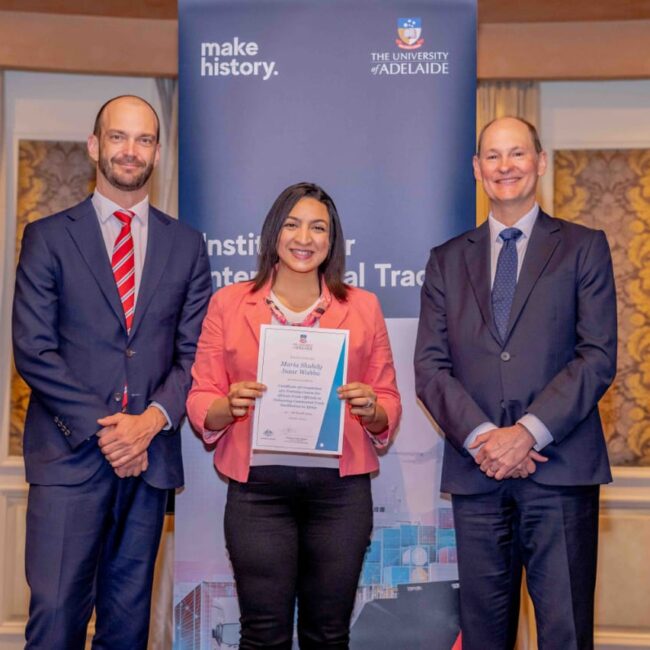
A defining moment in Maria’s professional journey came in March 2025, when she participated in Australia Awards Africa’s short course, Enhancing Continental Trade Facilitation in Africa, delivered by the Institute for International Trade at Adelaide University.
The course focused on practical approaches to trade facilitation within the framework of the African Continental Free Trade Area (AfCFTA). For Maria, it marked a shift from theoretical understanding to applied policy analysis.
“The training strengthened my ability to assess reforms in both continental and global contexts,” she says.
The experience has since informed her engagement with international partners and internal policy discussions, particularly in positioning Egypt as a strategic gateway to African markets.
Why Trade Analysis Matters
Trade agreements are not neutral instruments. They reshape markets, alter competitive dynamics, and redistribute opportunities across sectors. Before committing to any framework, governments must understand who benefits, who may be exposed, and how risks can be managed.
Maria’s role focuses on evaluating free trade agreements (FTAs), both existing and proposed, to ensure Egypt’s global engagement aligns with national priorities. Her portfolio includes agreements with key partners such as the European Union, the European Free Trade Association (EFTA), and Mercosur, as well as the indirect effects of agreements to which Egypt is not a signatory.
Through quantitative analysis, she examines trade flows, tariff structures, and sectoral performance, translating technical findings into policy-relevant advice for senior decision-makers.
From data to strategy
One of Maria’s current assignments involves analysing the potential impact of the EU–Mercosur Free Trade Agreement. Although Egypt is not a party to the agreement, its implications are significant. Preferential access granted to Mercosur countries could increase competition for Egyptian exports in European markets, particularly in already saturated sectors.
By comparing tariff advantages, export profiles, and market access conditions, Maria identifies where Egyptian products may face pressure and where strategic opportunities could emerge. This enables policymakers to respond proactively through export diversification, targeted industrial support, or policy adjustment. Her work ensures that Egypt’s trade strategy is guided by foresight rather than reaction.
“Evidence allows governments to respond before risks materialise, not after,” she stresses.
Trade reform, economic resilience and addressing structural challenges
Egypt, like many developing economies, has faced structural trade challenges in recent years, including foreign currency shortages and lengthy customs clearance procedures. These constraints affect exporters, investor confidence, and overall economic efficiency. Trade analysts play a crucial role in linking liberalisation ambitions with institutional readiness. Maria supports broader government reforms aimed at modernising trade infrastructure, improving border efficiency, and strengthening the business environment. Her analysis informs policies that reduce friction, enhance transparency, boost competitiveness, key pillars of economic resilience in an uncertain global economy.
“Access to markets is only meaningful if systems allow businesses to compete effectively,” she notes.
Maria conducts feasibility studies and working papers on agricultural and industrial exports, evaluates Egypt’s trade agreements with partners such as the European Union (EU), European Free Trade Association (EFTA), and Mercosur to identify high-growth opportunities, and supports import-substitution strategies to curb foreign currency leakage. She collaborates closely with the General Authority for Investment and Free Zones (GAFI), promoting foreign direct investment through initiatives such as the Golden License and the Electronic Investment Map, while raising awareness among local and international investors about structural reforms.
These efforts align with government measures, including a flexible exchange rate policy, major investment deals such as Ras El Hekma, and improvements to customs and logistics systems. Together, they have reduced customs clearance times to just over five days, improved transparency, attracted sustainable foreign capital, and strengthened Egypt’s position as a competitive trading partner. Maria’s work exemplifies how targeted policy analysis and coordinated reforms can translate trade liberalisation ambitions into tangible economic benefits.
Bridging global and continental frameworks
One of the most tangible outcomes of Maria’s Australia Awards experience has been her ability to connect European-focused trade work with Egypt’s AfCFTA implementation efforts. Within the Ministry, she increasingly serves as a bridge between teams managing EU agreements and those advancing continental integration.
This role enhances policy coherence and maximises the developmental returns of Egypt’s overlapping trade commitments. It also strengthens Egypt’s ability to articulate its trade position clearly and confidently in international negotiations.
“Trade commitments deliver more when they speak to each other,” she says.
Impact beyond the office and national borders
While trade analysis rarely attracts headlines, its impact is far-reaching. Maria’s work influences policies that affect exporters, investors, and workers across Egypt’s industrial and agricultural sectors. By identifying risks early and highlighting opportunities, her analysis supports sustainable growth and protects national interests in an increasingly complex global trade environment.
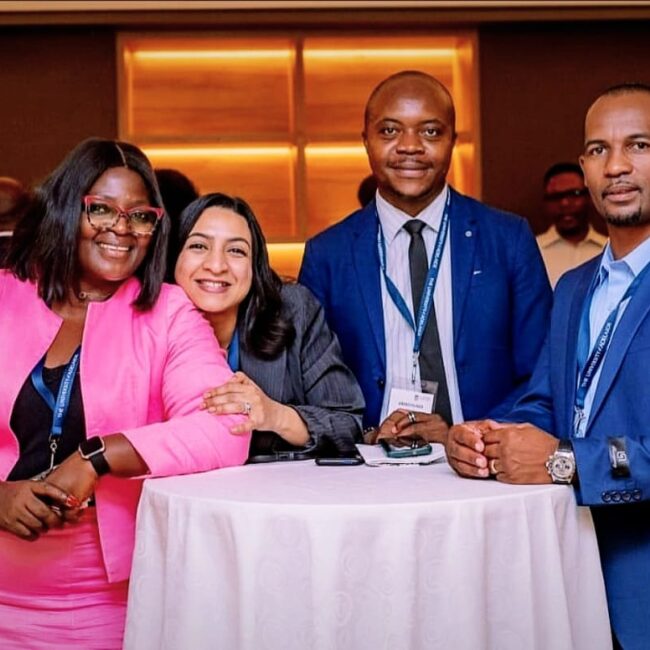
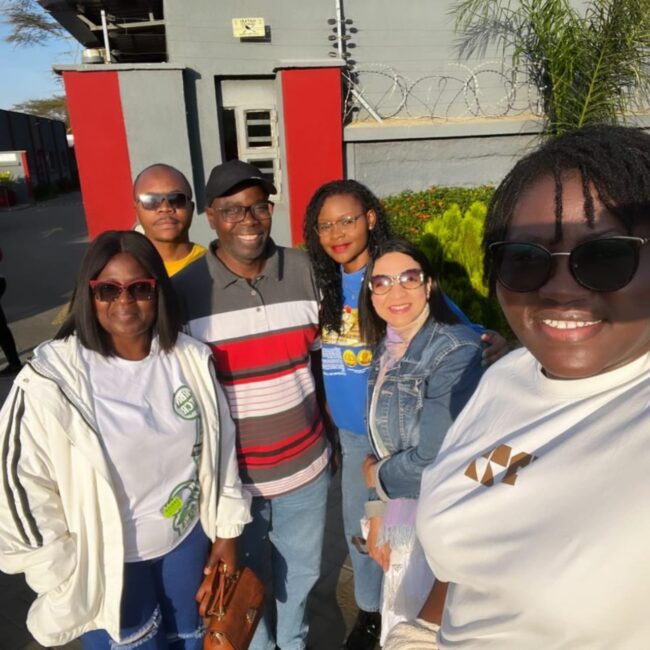
Beyond national borders, Maria actively engages with other Australia Awards alumni from across Africa, including officials from Nigeria, Mauritius, and Ghana. Through formal and informal networks, they exchange best practices on trade facilitation and AfCFTA implementation. This alumni collaboration functions as a cross-border community of practice, strengthening institutional capacity and supporting regional integration.
“Continental agreements only succeed when people collaborate,” she says.
A new generation of public service
Maria represents a new generation of public servants who combine technical expertise, international exposure, and a strong development mindset. Her experience illustrates how targeted capacity building through international scholarships strengthens national institutions from within.
As global trade continues to evolve, the demand for professionals who can translate data into sound policy will only increase. Their work may remain behind the scenes, but its influence is decisive.
Alum Maria Shuhdy Isaac Wahba reminds us that sustainable trade outcomes depend not only on political will, but on the quiet, rigorous work that ensures global engagement delivers genuine national advantage.


Connect with us
Any questions?
If you cannot find the answer on our FAQs page, feel free to get in touch by emailing .