
The climate crisis has not spared developing countries, particularly in Africa, where agriculture remains the backbone of many economies. Ethiopia offers a stark example. On 15 July 2025, Afdera, a town in the Afar region, was devastated by landslides triggered by heavy rains, claiming 229 lives and displacing an estimated 26 000 people, according to Care International. Just a year earlier, similar landslides in South Ethiopia killed 250 people and displaced more than 15 000, drawing intervention from the United Nations. These incidents underscore the urgent need for robust climate action.
Africa remains disproportionately vulnerable to climate change. The UN World Food Program reports that the region experiences some of the world’s most severe cyclones, droughts, floods, and wildfires. Without stronger and more coordinated action, experts warn that extreme weather events will intensify, pushing millions of smallholder farmers deeper into hunger and poverty.
For alum Asefa Chimdi from Ethiopia, challenges such as food insecurity also represent opportunities for collaboration. He sees the role of environmental scientists as crucial in building food and environmental security in Africa. His mission is rooted in taking small, practical steps with regional applicability, an approach reinforced by the knowledge he recently gained at Curtin University in Perth, Australia.
Asefa, who works with Ethiopia’s Ministry of Agriculture, was a recipient of the Australia Awards Africa Financing Climate Action short course in 2024. The program convened environmental professionals from across the continent, enabling knowledge exchange, collaboration, and long-term partnerships. Through the course, participants learned to access various sources of climate finance including public, private, and multilateral funding and to design project proposals that meet donor priorities.
“The interactive nature of the course allowed me to apply theoretical knowledge to empirical realities, enhancing my confidence to navigate the complexities of climate financing. The experience was transformative, as I gained not only knowledge but also a supportive network of professionals committed to climate action,” Asefa reflects.
Not long after completing the course, Asefa was promoted to Senior Environment and Climate Change Specialist within Ethiopia’s Participatory Agriculture and Climate Transformation (PACT) Program. PACT was designed to promote climate-smart farming, including the use of drought-resistant crops, efficient water use, and sustainable agricultural practices. Its mission is to strengthen food security by increasing agricultural productivity, expanding access to rural finance, developing irrigation systems, and modernising farming methods. Over the next few years, PACT aims to reach more than 150 000 smallholder farmers across several regions through components including reducing import dependence, integrating rural producers into inclusive, equitable commercial markets, boosting household resilience to climate shocks, strengthening community-led productive landscapes and generating employment opportunities for women, youth and persons with disabilities.
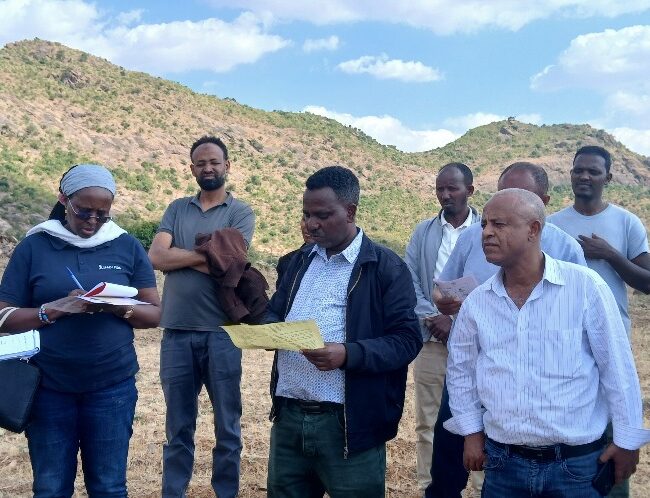
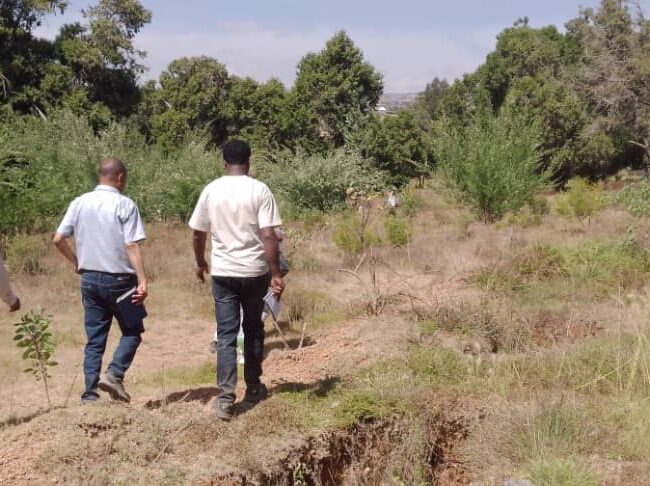
As a Senior Environment and Climate Change Assessment Specialist, Asefa is responsible for ensuring that watershed and climate adaptation interventions are adequately captured in the PACT Program’s landscape development and investment plans, evaluate the performance of introduced practices and technologies and work closely with knowledge management and communication specialists to share and disseminate acquired knowledge. He also monitors the changes in the state or condition of the watershed and tracks the performance of the program against its objectives, based on an appropriate set of environmental, climate, social, economic, and institutional indicators. Asefa collaborates with a multi-disciplinary team of irrigation engineers, social scientists, and other experts to support climate resilient small-scale irrigation which would bring increased benefits to farmers. In addition, Asefa is tasked with developing and strengthening partnerships between the various bureaus and regional agricultural research institutions so that expertise and technology from the various institutions reach farmers’ fields and schemes. These various responsibilities among others, enable Asefa to not only give back to the community but contribute to agricultural development and natural resource management in Ethiopia.
The Australia Awards Africa short course has strengthened Asefa Chimdi’s day to day work in three key areas. The first is strengthening climate finance, planning and resource mobilisation.
“The course enhanced my understanding of various climate finance mechanisms, including international funds, public-private partnerships, and blended financing. This knowledge helps me design and align PACT Program interventions with potential funding sources and prepare high-quality proposals to mobilise resources for climate-resilient watershed and livelihood projects” noted Mr Chimdi.
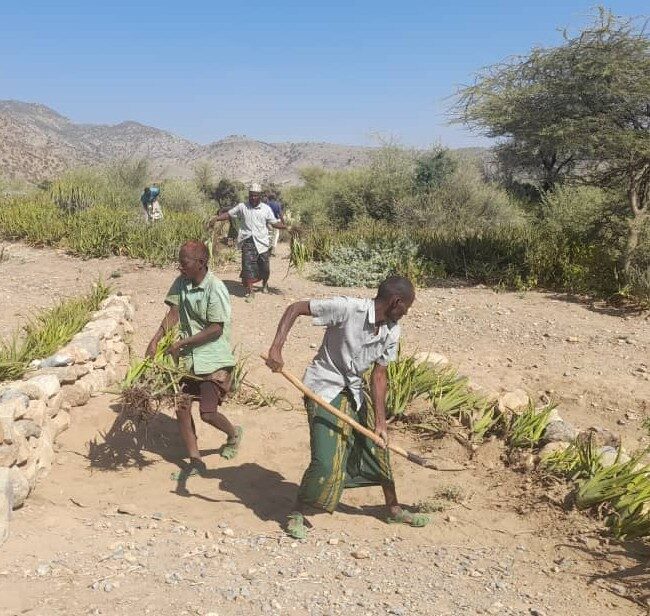
The course has also been valuable in helping Asefa integrate financial sustainability into climate smart interventions. As an Australia Awards alum, he now applies principles of cost-effectiveness and long-term financial sustainability when planning watershed and climate adaptation investments. This ensures that project activities such as soil and water conservation, reforestation, and green livelihood initiatives are not only environmentally sound but also financially viable and scalable.
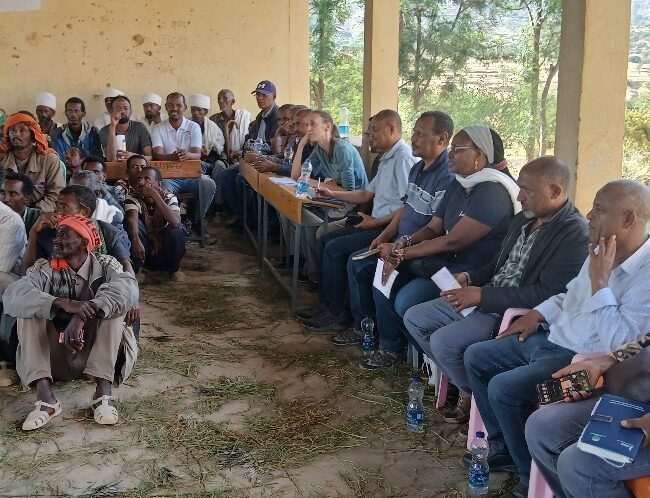
Lastly, the short course enhanced Asefa Chimdi’s capacity for stakeholder engagement and policy dialogue on climate finance. The course improved his ability to engage with government institutions, development partners, and community organisations on financing options for climate action. This has enabled him to facilitate informed discussions, advocate for increased budget allocations towards climate initiatives, and guide local actors in accessing and managing climate funds effectively.
Ethiopia’s agricultural sector is central to its economic growth. According to the African Development Bank Group, agriculture accounted for 32% of Ethiopia’s GDP in 2023, a share that is expected to rise through initiatives such as PACT. With a GDP of over US$126 billion in 2022 (World Bank), Ethiopia is one of Sub-Saharan Africa’s fastest-growing economies. Strengthening climate resilience in agriculture is therefore critical not only for food security but also for sustaining growth amid mounting climate risks.
Australia has been a valuable partner in this effort. Through Australia Awards Africa, it has provided scholarships and short courses to many African professionals, equipping them with the skills to lead reforms, build resilience, and drive sustainable development. By investing in education and professional growth, Australia is helping to remove barriers that have long limited the potential of Africa’s talent pool.
Asefa Chimdi stands as a testament to the impact of this partnership. His story highlights how knowledge, collaboration, and opportunity can converge to create solutions for some of Africa’s most pressing challenges.
Story by Martha Mamombe.
Connect with us
Any questions?
If you cannot find the answer on our FAQs page, feel free to get in touch by emailing .