
Richmond Zinbonche’s story (Masters of Agribusiness, University of Queensland (UQ), 2018) is about his journey of learning and growth. One of a scholar turned leader who is dedicated to improving the agribusiness sector of Ghana and aligning it with the country’s development agenda. With his newly acquired degree in hand, Richmond’s potential was obvious, and he was soon promoted.
Ghana’s economy is largely agrarian and derives most of its revenue from the sector. Richmond knew the sector had the potential to alleviate poverty, trigger inclusive growth, and provide food security for the nation. As Ghana’s agribusiness sector expands, it also enhances the wealth of the country. For this reason, he makes sure that his project transitions subsistence farmers into commercial farmers or large agribusiness players.
Upon his return to Africa, Richmond was promoted to the District Director of Agriculture for Civil and Local Government Services in districts such as Lambussie and Sisala West where he is also currently stationed in the town of Gwollu. When initial mistrust and financial challenges threatened the Lambussie District Agricultural Department, Richmond was posted there to take over administration and financial management to ensure that the anomalies were rectified. The leadership strategies he learned during his scholarship guided his establishment of forums that fostered collaboration, enhanced mutual understanding and ensured that decisions were taken cohesively. Richmond scouted potential commercial farmers and linked with end-market buyers.
His current duties in Sisala West include promoting policies, strategies, and technologies for the improvement of agribusiness, agro-processing, and crop, animal, and fish production. Ninety per cent of Labussie District’s population of more than 51,000 people and 82% of Sissala West’s population of almost 64,000 people are involved in agriculture.
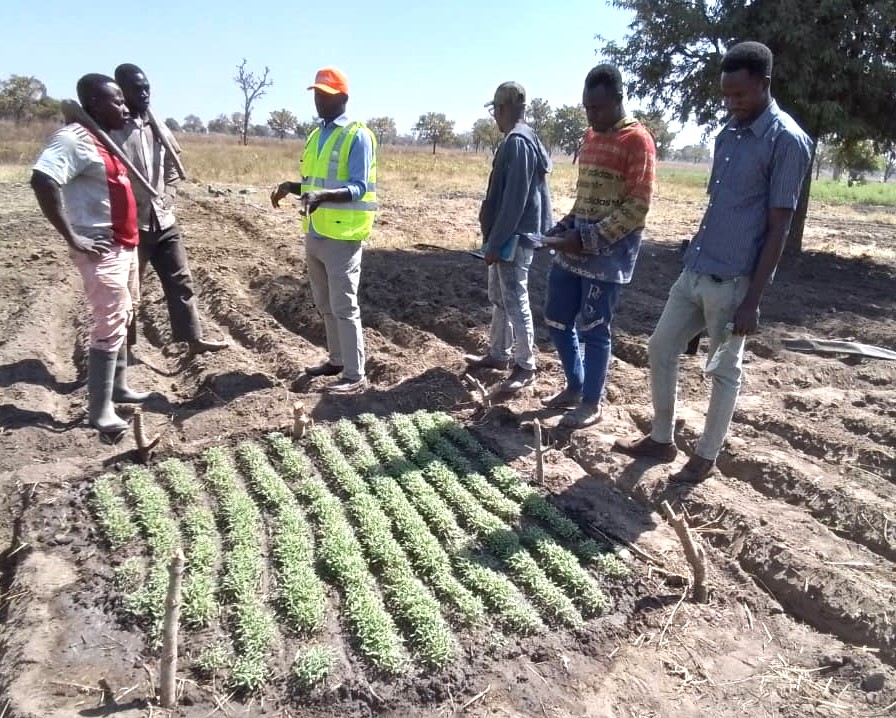
He regards his role in elevating 115 small-scale farmers with an average of two hectares, into landholders who manage 25 hectares of land each as his landmark achievement. This project supported subsistence soybean farmers to commercialise their operations into larger enterprises. Richmond was responsible for the scouting and selection of soya bean farmers interested in upscaling their production levels. He facilitated the introduction of a high-yielding and non-shattering soybean variety and the linkage of these farmers to both local and international markets, assuring them of buyers no matter the production volumes. He also linked farmers to credit sources and other inputs to upscale to commercial production and helping farmers to draft financial proposals. But it does not stop there, his initiatives transcended district boundaries, transforming the lives and financial well-being of farmers across Ghana through the soybean value chain. This in return, opened the path to a brighter economic future for the country as well.
His path to District Director has, however, not been without challenges. Scarce funding and the escalating impact of climate change posed significant obstacles. But, armed with his prior work experience and the skills and knowledge gained during his studies in Australia, Richmond navigated these challenges and steered initiatives to uplift rural communities and amplify agricultural productivity.
“My goal with the Australia Awards Scholarship was to use my new knowledge and skills to advance the Ghanaian government’s objective of fostering equitable growth and alleviating poverty through the modernisation of agriculture in the country”, says Richmond. Before his promotions and at the time of his Scholarship, Richmond was employed as an Extension and Agribusiness Development Officer (Farmer-Based Organisations (FBO)) for the Ministry of Food and Agriculture.
Beyond his immediate achievements and responsibilities, Richmond also advocates for infrastructural development in the form of roads and irrigation that will promote agribusiness further by allowing efficient transportation and water supply. This in turn fosters better productivity and better access to markets for farmers.


Connect with us
Any questions?
If you cannot find the answer on our FAQs page, feel free to get in touch by emailing .