
On the East coast of Africa lies Mauritius, a small tropical island at risk of vanishing due to rising sea levels and coastal erosion. With limited land resources available and strict disease management practices adopted, traditional agricultural practices are becoming too costly for Mauritians. Currently, there is a lack of uptake of biotechnological tools to improve crops, and research is needed to develop technologies that can support improved agricultural practices. One Mauritian scholar, Kristhee Samputh, is set to impact these challenges positively through her current studies towards a Master of Biotechnology at the University of Queensland to help meet these deficits.
Apart from her academic work, Krishtee used her university networks to find opportunities outside of her coursework and build useful networks in support of her overall skills set and well-being. Aside from engaging in activities like fencing and tennis to de-stress after a busy week juggling lectures and assignments, Kristhee has also engaged in research programs, mentoring and providing welfare support to participants on an Australia Award Africa Short Course.
Research programs
University research programs allow students to engage in and contribute to research projects across different sectors during semester breaks. Krishtee has been involved in two research programs, which she found through the university website. She has been selected to engage in two programs with the Queensland Alliance for Agriculture and Food Innovation (QAAFI). The first runs during the winter break and considers the impact of abiotic conditions (temperature, water sunlight, soil and air) on the growth and change of fusarim wilt in bananas. The second, completed this past summer furthered Krishtee’s knowledge of the impact of abiotic conditions on fusarim virus growth in bananas. The summer research project looked at how different environmental conditions like pH, salinity level and temperature affect the behaviour of fusarium disease. The fusarium disease is a big threat to the banana industry worldwide and is present in Mauritius. Mauritius has similar climatic conditions to Queensland and, therefore, the outcomes of this research can contribute to how fusarium disease is being studied and managed in Mauritius. It can also open up avenues for collaborative research on this disease for which there is no cure at the moment.
Mentorship
Krishtee has recently been providing mentoring support as part of the University of Queensland’s Get Set Program. The purpose of this program is to help new students settle into their new life at the university through support and guidance over a six-week period.
Having engaged in the program as a new student in 2024, Krishtee is glad to have the opportunity to connect with new students and provide them with support, recognising how challenging it can be to adjust to the academic environment. In her role, Kristhee meets with nine mentees at least once a week to share experiences, provide guidance or simply catch up as a reminder to the new student that they have support available should they need it.

Welfare Officer for an Australia Awards Africa Short Course
Krishtee learned, through the Sponsored Students Unit of the University, of an opportunity to serve as the Welfare Officer for the Australia Awards Africa Short Course: Mining Governance in Africa, delivered by the University of Queensland. A Welfare Officer is responsible for supporting participants who require pastoral care including medical, well-being and emergency assistance. This opportunity allowed Krishtee to travel to Perth, Gladstone and Emerald, showcasing Australia’s diverse geographical landscape. Engaging in this work utilised Krishtee’s fluency in English and French to ensure sufficient support of participants from different linguistic backgrounds.
Through this opportunity Krishtee also gained experience in working with people during times of change, while they adjust to an intensive academic schedule and living in a new country, an important soft skill for stakeholder engagement.
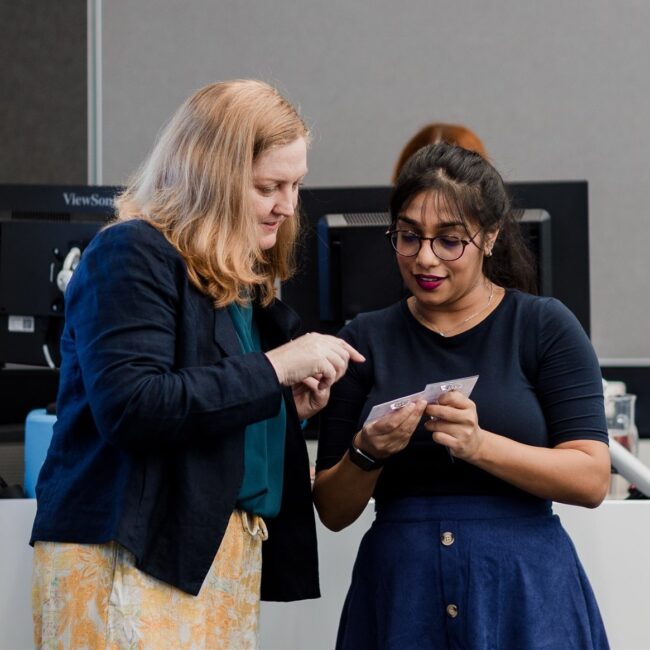
Krishtee is a Research Scientist, and she intends on using the knowledge and experiences gained to contribute to new research projects in Mauritius, emphasising uptake of biotechnological tools and techniques to bring solutions to farming communities.
“Engaging in On-Award activities through the University of Queensland has largely contributed to her personal growth and engaging with scientists has created a network for future collaboration”, she says.
Krishtee has this message for scholars: “Be curious, don’t stay in your comfort zone, try engaging in new things that you would not normally do, and always seize whatever opportunity comes to you.”
Connect with us
Any questions?
If you cannot find the answer on our FAQs page, feel free to get in touch by emailing .