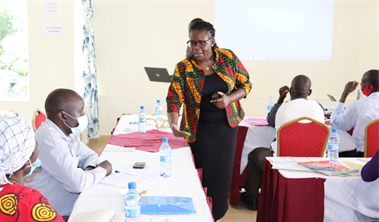
Australia Awards short course alumna, Martha Opondo applies her research capabilities and the knowledge gained from her short course in Increasing the Development Impact of Agricultural Research (IDIAR) to tackle the many challenges facing the agricultural sector in Kenya. She completed her short course in 2016 at the University of Sydney and has since been involved in many research and implementation projects where she suggested and implemented solutions to the issues affecting Kenya’s agricultural sector.
Martha credits the Australia Awards IDIAR short course for providing her with the opportunity to build her knowledge and professional capacity in research, training and analysis. This has increased her confidence and played a big role in the work she has undertaken and the important roles assigned to her since.
According to Martha, “Participating in the IDIAR short course opened my eyes to the possibilities for competency development and capacity building through short course training”. She has since completed three international short courses on Gender Equality and Women Empowerment, Climate Change Basics for Building Community Resilience and Facilitating Multi-Stakeholder Partnerships for Sustainable Food Systems. These studies have augmented her skills in gender mainstreaming and social inclusion in agricultural research and development and enhanced her understanding of how to approach resilience building in climate change. It has also improved her collaboration skills in working with partners towards contributing to food and nutrition security.
Impact on the Kenya Climate Smart Agriculture Project (KCSAP)
One example of the work that brought significant personal and professional growth for her is the 2019 project with the title “Enhancing gender mainstreaming and Social Inclusion in the Adoption of Climate Smart Agriculture (CSA) and Technology, Innovations and Management Practices (TIMPS)”. The project forms part of the bigger Kenya Climate Smart Agriculture Project (KCSAP), a joint venture between the Government of Kenya and the World Bank implemented across 24 counties in Kenya.
Her role was to assist with coordination, designing data collection methodologies, leading the participatory gender analysis process and capacity building and sensitisation of beneficiaries on gender issues in climate-smart agriculture technology adoption based on the research outcomes. An outcome of this project was the identification of gender-based constraints and social exclusion in climate-smart agriculture value chains which in turn helped to develop better gender-responsive technologies and strategies. Due to the cultural patterns of labour, men tend to be excluded from the production and harvesting of crops such as sorghum, millet and cassava and other value-chain activities. This resulted in women being overburdened with responsibilities and negatively impacted the productivity of households. It also influenced the way value chains are prioritized and resources are allocated.
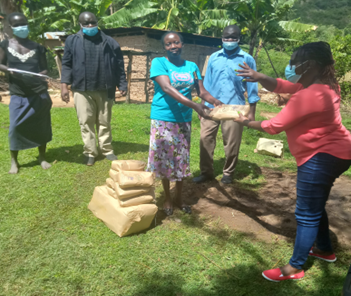
“Traditionally women undertake the production and post-harvest of these crops while men are excluded from the so-called “women’s crops. The higher participation of men forms an integral part of increasing household productivity and improving the resilience to threats associated with climate change”, says Martha.
As part of this project, Martha and her co-investigators used a household survey to identify the barriers to the adoption of more socially inclusive approaches to climate-smart agriculture. The study identified the culturally determined labour patterns across the CSA value chains and also included the social, cultural, economic, technological, and environmental factors that affected these value chains. The researchers shared their findings at six scientific conferences and symposia.
Another key result of the KCSAP research project was the training of 82 male and female community gender champions on Gender Action and Learning Systems (GALS) as part of a gender transformative approach. The training helped them to develop better visions and goals and enabled them to identify the specific household gender dynamics that prohibit them from being successful. Subsequent research showed that the champions transferred their knowledge onto other community members and in the process there is now a much bigger awareness in the communities about the need to challenge these gender stereotypes.
Her role as a Research Extension Liaison Officer
Martha took advantage of the opportunity when she was appointed as a Research Extension Liaison Officer (RELO) in Kisumu and Siaya Counties to increase the adoption of CSA and TIMPS in communities and to advance the sensitisation and training of beneficiaries, staff and community leaders about the importance of integrating gender perspectives in all aspects of community development. In Kisumu and Siaya Counties, Martha facilitated technical training for 1460 individuals in the community. Staff received training on tools such as Participatory Integrated Community Development (PICD) and Farmer Field and Business School methodology. As a result, trained staff built the capacity of beneficiaries in climate-smart agriculture and conducted successful Farmer Field Schools which in return led to increased productivity and better incomes.
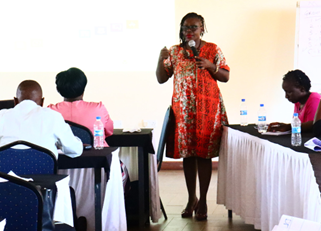
The Australia Awards Africa Small Grant Project
Between 2018 and 2019, Martha and her fellow alumni, Florence Olubayo (Kenya), Elizabeth Odoyo (Kenya), Olaide Aderibigbe (Nigeria), Philip Chemeltorit (Kenya), Safari Zero (Kenya) and Justine Onyinge (Uganda) received an Australia Awards Alumni Small Grant to conduct a Situational Analysis of Horticultural Waste Utilisation in Kenya, Uganda and Nigeria. The study consulted mango farmers as key study subjects.
Martha oversaw the technical coordination, data analytics and report writing in Kenya and used her networking skills in working with local extension services to support the data collection of the project. As part of the outcomes of the project, 48 farmers received training and materials on the use and management of mango waste.
With her skills and passion, Martha hopes to continue contributing to the betterment of her community through agricultural research and development. Martha currently works in human resources management at the Biotechnology Research Institute in Kenya. She is keen to continue exploring future research opportunities.
Connect with us
Any questions?
If you cannot find the answer on our FAQs page, feel free to get in touch by emailing .